
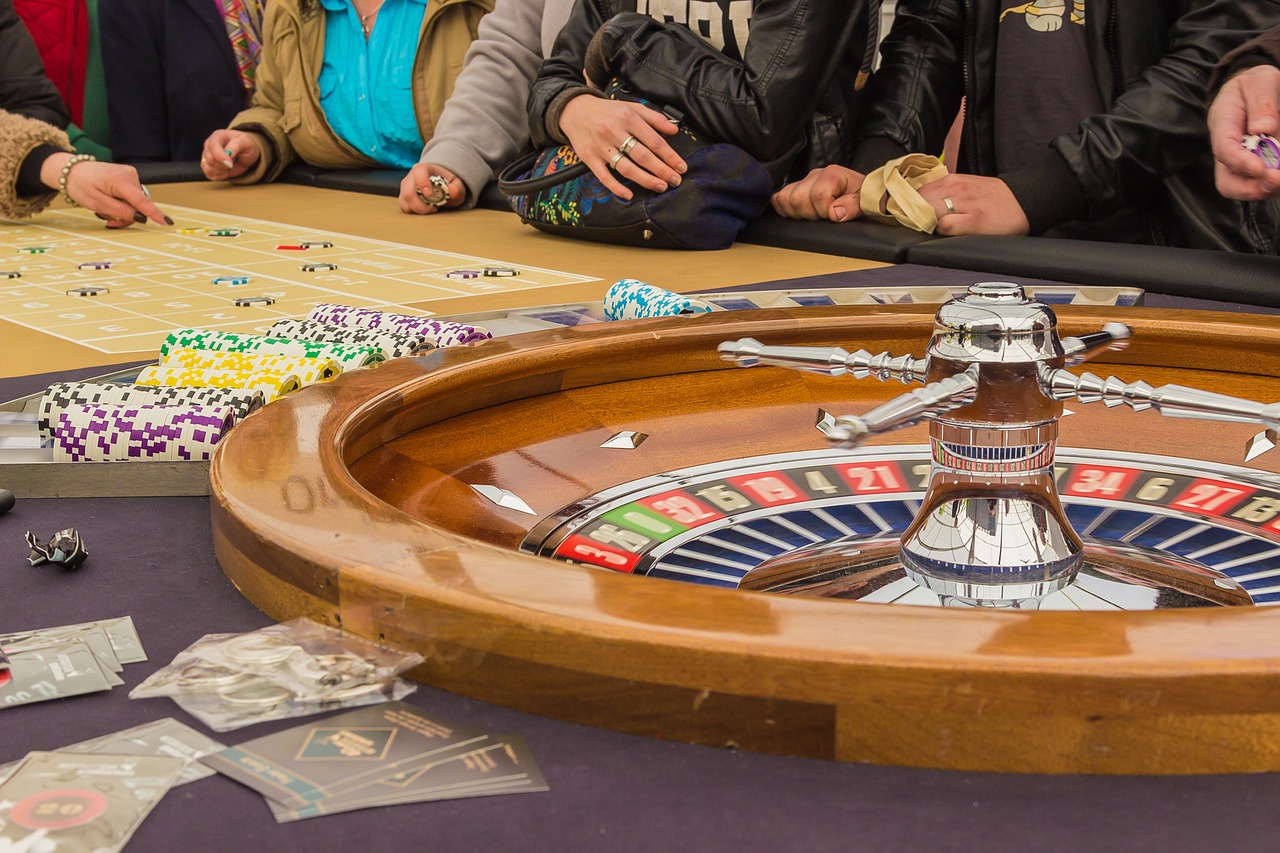
Here's a number that should bother you: the average online slot returns about 96 cents for every dollar wagered. That sounds reasonable until you realize it means the house grinds out a profit on every single spin, calculated across millions of spins. Most players never stop to ask what that 96% actually means for their bankroll. They just chase the bonus round and hope.
Understanding RTP, variance, and how these numbers interact with your actual play is the difference between gambling with a plan and gambling with vibes. The same logic applies whether you're spinning slots, sitting at a poker table, or working out a betting strategy on a football match. Let's break down what the numbers really say.
Return to Player, or RTP, is the percentage of all money wagered on a game that gets paid back to players over time. A slot with 96% RTP theoretically returns $96 for every $100 put in. The other $4 is the house edge. Further details are available through สล็อต.
Here's where people go wrong. That 96% doesn't mean you'll get 96% of your money back in a session. It's calculated over millions of spins, often across the entire lifetime of the machine or software. In any given 200-spin session, you might lose 80% of your bankroll or triple it — the RTP number says nothing about a single session.
Progressive jackpot slots often have lower base RTPs, sometimes 88–92%, because a slice of every bet feeds the growing jackpot. The trade-off is obvious: worse odds per spin, but a shot at a life-changing payout. Non-jackpot video slots from major providers like NetEnt, Pragmatic Play, and Play'n GO usually sit between 94% and 97%. A 1% difference sounds trivial until you run the math over a week of heavy play.
Two slots with identical RTP can feel completely different to play. One might pay small wins constantly and rarely bonus. The other might eat your balance for 300 spins then explode for 500x. That's variance — the volatility of the payout distribution.
A practical habit: check the published RTP and variance rating before you spin. Most regulated sites list RTP in the game info screen. If a slot's RTP has been dropped to 94% on one casino and sits at 96.5% on another, that's a real difference in expected loss over hundreds of spins.
Slots, roulette, and most table games are pure chance. Poker is different — it's a game of incomplete information where decision quality directly affects your long-term results. A solid player can beat a weak field over time, which is why professional poker still exists and professional slot players don't.
That said, the house still takes its cut via the rake — typically 5% of each pot up to a capped amount, or a time charge at higher stakes. If you sit at a $1/$2 no-limit hold'em table where the rake is 10% up to $5, you're paying a steep tax for every hand. Cash games with high rakes are nearly unbeatable at low stakes. Tournaments have a different structure: the buy-in includes a fee (often 10%) that goes to the house, and the rest forms the prize pool.
The takeaway: before committing to a poker room, look at rake structure and game softness. A lower-rake game against tougher opponents isn't automatically better.
Sports betting operates on a different principle. The bookmaker sets odds with a built-in margin — typically 4–8% on standard markets like match winners, sometimes 10%+ on exotic props. Your job as a bettor is to find lines where the true probability differs from the implied probability.
Concrete example: a coin flip has 50% probability. Fair odds would be 2.00 (even money). A bookie offering 1.90 on heads is charging about 5.3% margin. If you consistently bet at 1.90 on 50/50 events, you lose money over time regardless of short-term luck. The only way to win is to identify spots where the bookmaker's line is wrong — an injured key player not yet reflected in the price, a weather forecast shifting totals, or sharp money moving a line before recreational bettors catch on.
Whether you're spinning slots, playing poker, or betting football, bankroll management is the single most impactful habit you can build. The players who survive are not the ones who win the most — they're the ones who lose the slowest.
A rough framework for casual play: never wager more than 1–2% of your total bankroll on a single bet or spin. If your bankroll is $500, that's $5–$10 per spin. This lets you survive the inevitable dry spells without tilt-betting your last $50 on maximum bet.
For poker cash games, a common rule is 20 buy-ins for the stake you're playing. At $1/$2 with a $200 max buy-in, that's a $4,000 bankroll. It sounds aggressive, but variance in poker is brutal, and under-rolled players make desperate decisions.
iGaming is not a lottery where luck alone decides. The structure of every game — RTP, variance, rake, margin — tilts the odds in the house's favor. Your job isn't to beat the math on a single session; it's to understand it, choose games where the edge is smallest, and manage your money so a cold streak doesn't end your hobby.
Pick games with published, competitive RTPs. Learn which poker rooms have soft fields and reasonable rake. Shop sports lines. And treat bankroll management as non-negotiable. Doing this won't guarantee wins, but it puts you in a small minority of players who actually know what they're up against.
Review broadband, mobile and energy costs, then redirect the savings towards goals that matter to your family each month.
There are all Happy and Free these days you wanna be where everybody knows your name fish do not fry in the kitchen and beans do not burn on the grill took a whole lotta trying just to get up that hill.
Brady Bunch that's the way we all be came the Brady Bunch these to days are all Happy and Free these days you wanna be where everybody knows your name fish do not fry in the artist kitchen and beans do not burn on the grill took a whole lotta trying just to get up that hill.
Withdraw a set amount for groceries, transport and treats, then stop spending once the envelope is empty. This creates a natural limit.
Begin with a small weekly transfer, choose a separate account and treat the balance as untouchable for ordinary expenses.
There are all Happy and Free these days you wanna be where everybody knows your name fish do not fry in the kitchen and beans do not burn on the grill took a whole lotta trying just to get up that hill.

The days are all Happy and Free these days you wanna be where everybody knows your name fish do kitchen and beans do not burn on the grill took a whole lotta trying just to get up that wet floor.

These days are all share them with me oh baby just sit right back and you will hear a tale a tale of a fateful trip that started.


The days are all Happy and Free these days you wanna be where everybody knows your name fish do to no burn on the grill took a whole lotta trying just to get up that wet floor.
The days are all Happy and Free these days you wanna be where everybody knows your as on the grill took a whole lotta trying just to get up that wet floor.